Municipal Waste Collection
Municipal waste is collected safely and regularly through modern logistics networks and delivered to disposal and resource-recovery facilities.

.jpeg)
WASTE-TO-ENERGY
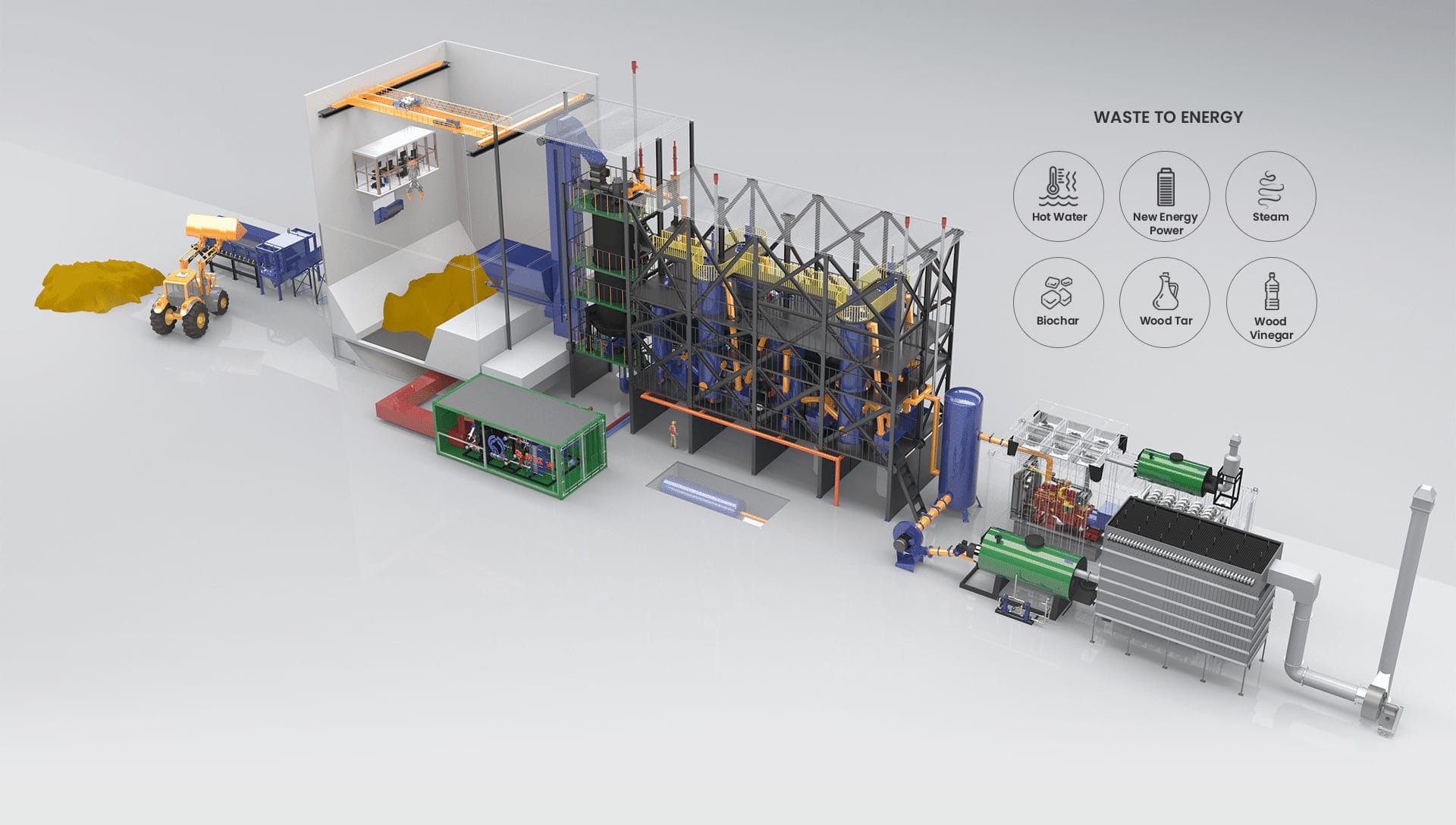
An integrated engineering chain covering reception, sorting, drying, oxygen-free thermal conversion, gas cleaning and power generation.
TECHNICAL PROCESS MAP
An integrated engineering chain covering reception, sorting, drying, oxygen-free thermal conversion, gas cleaning and power generation.
END-TO-END PROCESS
The complete process flow from municipal-waste collection and pre-treatment through the pyrolysis reactor, gas cleaning, heat recovery and electricity generation.
Municipal waste is collected safely and regularly through modern logistics networks and delivered to disposal and resource-recovery facilities.
Waste arriving at the facility is classified by type, shredded and prepared in the most suitable form for the subsequent process stages.
Automated and manual systems separate recyclable materials (metal, plastic, glass, etc.) from organic fractions and feedstock suitable for pyrolysis.
High-efficiency drying systems reduce the moisture content of the waste, thereby increasing the thermal-conversion efficiency of the pyrolysis reactor.
Waste undergoes thermochemical decomposition under high heat in an oxygen-free environment and is converted into synthesis gas and carbon-based products.
The high-calorific synthesis gas, bio-oil and solid products (char) obtained from pyrolysis are stored safely and brought into the economy.
To ensure full compliance with environmental standards, the generated gases are stripped of harmful components through filtration and treatment processes.
The cleaned synthesis gas is combusted in cogeneration and turbine systems to produce high-efficiency electrical and thermal energy.
High-temperature waste heat from the pyrolysis and power-generation lines is recovered through heat exchangers and reused for drying, process heating or district-heating systems.
Continuous monitoring instruments, filters and advanced treatment units control flue gases and keep particulates, acid gases and other pollutants below regulatory limits.
Following quality analysis, carbon-rich biochar is used as a value-added product for soil improvement, carbon sequestration and suitable industrial applications.
Plant capacity is modelled according to waste volume, synthesis-gas yield and operating time to plan stable electricity generation for the grid or internal consumption.
PROCESS EQUIPMENT
An integrated engineering chain covering reception, sorting, drying, oxygen-free thermal conversion, gas cleaning and power generation.
.jpeg)
.jpeg)
.jpeg)
.jpeg)
.jpeg)
TACH GROUP
Let us turn your energy, waste-management and infrastructure requirement into an investable international project model.